JKA Philippines Davao International Tournament Signals New Era for Philippine Karate
Historic gathering brings 28 national and international dojo teams to Davao as JKA Philippines pushes youth development, global cooperation and traditional Shotokan excellence
 Dante A. Ulanday - Senior News Writer and Editor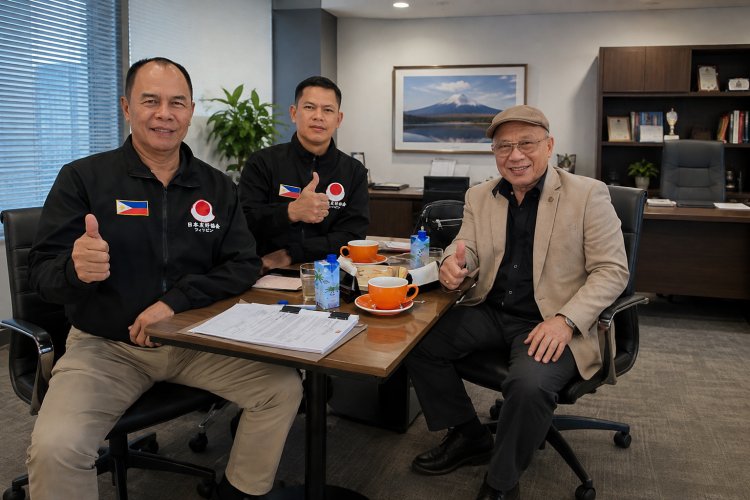
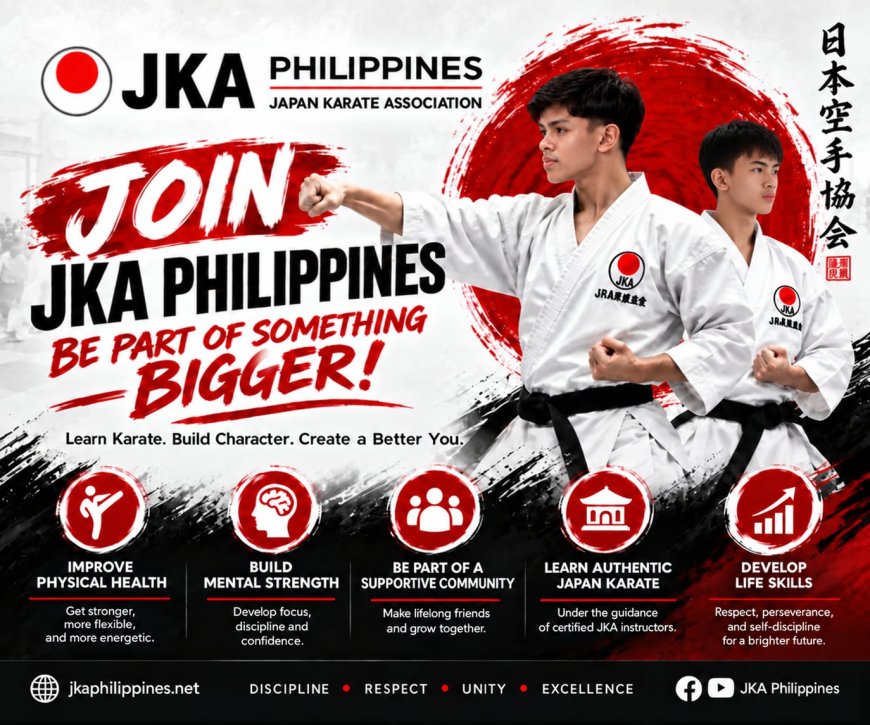
DAVAO CITY, Philippines — August 27, 2026 — The Philippines is emerging as an increasingly important center for traditional Shotokan Karate in Asia, with the 3rd JKA Philippines International Gasshuku and Tournament 2026 positioning Davao City at the forefront of that growth, according to Emeliano P. Murillo, CEO of the Japan Karate Association Philippines. (Complete Transcript of the Interview)
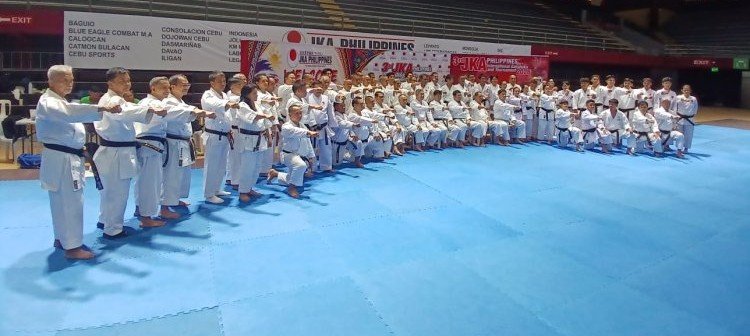
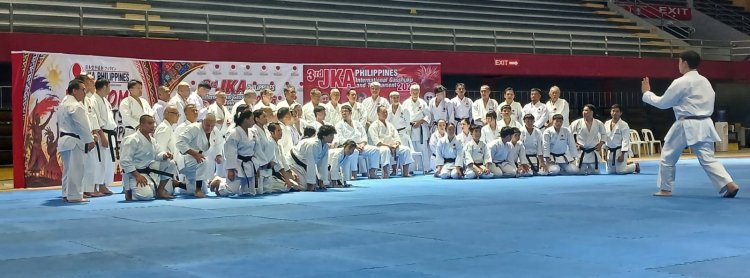
The international gathering, being held from August 27 to 30 at the University of Southeastern Philippines (USeP) Gymnasium in Davao City, brings together 28 national and international dojo teams, with participation involving the Philippines, Japan, Indonesia and Mongolia.
For Murillo, however, the significance of the event extends well beyond medals and championship titles.
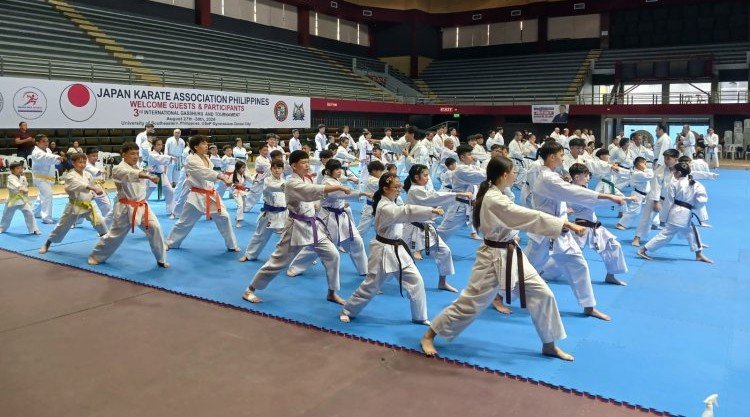
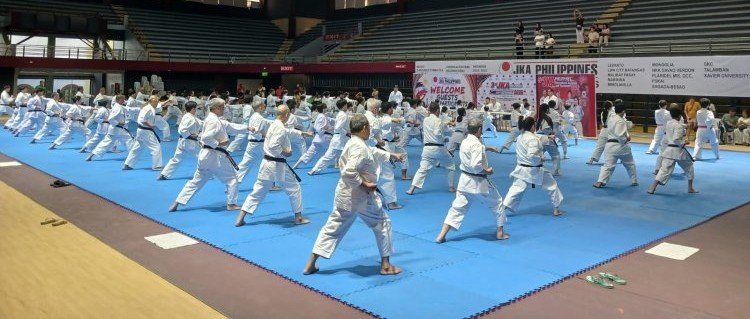
He described the tournament as an important milestone in the development of Philippine karate—one that demonstrates the country's ability to organize international-standard events while creating opportunities for young Filipino karateka to train, compete and build relationships with practitioners from other nations.
“The Philippines is rising as a major regional and global hub for traditional Shotokan Karate,” Murillo said.
He said hosting a gathering of this magnitude sends a clear message about global unity, grassroots youth development and the Philippines' capability to stage world-class competitions, while reinforcing one of the themes embraced by the organization:
“The World is Our Dojo.”
Japanese Masters Bring Honbu Expertise to Davao
A major highlight of the four-day gathering is the participation of senior instructors and officials from JKA World Federation Honbu in Tokyo, Japan.
Among them is Koichiro Okuma, Shihan, Chief of the Foreign Affairs Division and a 7th Dan JKA Master.
He is joined by Tatsuya Naka, Shihan, a prominent Japanese Shotokan Karate master, senior JKA instructor and examiner holding the rank of 7th Dan, and Koji Chubachi, Sensei, a JKA World Federation instructor holding a 6th Dan Black Belt.
Murillo said their participation gives Filipino karate practitioners a rare opportunity to learn directly from internationally respected instructors while strengthening technical cooperation between JKA Philippines and the organization's global leadership.
The event includes intensive technical training, development sessions in kumite, and instruction focused on the fundamentals of traditional Shotokan Karate.
Murillo said international gatherings of this kind can also deepen cooperation in technical exchange, judging standards, examinations and cultural diplomacy among JKA organizations in Japan, Asia and other parts of the world.
Filipino Karateka Ready for the World Stage
Murillo expressed confidence in the competitiveness of Filipino JKA athletes, pointing to their agility, quick footwork and tactical adaptability as important strengths.
But he stressed that international competition must never be viewed simply as a search for trophies.
“Beyond medals, competing internationally helps young Filipino karateka gain deep discipline, resilience and mutual respect,” Murillo said.
For JKA Philippines, he explained, karate remains fundamentally a form of character development.
The organization considers traditional Shotokan training a lifelong discipline in which physical technique is accompanied by humility, self-control, respect, etiquette and responsibility.
Competition, therefore, becomes a test of character rather than the sole purpose of karate training.
Murillo said JKA philosophy teaches practitioners to regard their opponents not as enemies but as partners in mutual development and self-mastery.
Victory should be accepted with humility, he said, while defeat should become motivation for improvement.
“Developing character is equally—if not more—important than producing champions,” Murillo emphasized.
That philosophy is particularly important for younger practitioners.
At a time when children face constant digital and social distractions, Murillo believes structured karate training can teach concentration, confidence, discipline and respect.
His message to parents considering karate for their children is simple: the benefits extend far beyond physical self-defense.
Davao Positioned as International Sports Destination
Murillo also sees the tournament as an opportunity to introduce Davao City to a wider international sporting audience.
Foreign athletes, coaches, officials and families are expected not only to compete but also to experience the hospitality and culture of Mindanao.
Murillo said he wants visiting delegations to remember the warmth of Davaoeño hospitality, vibrant local culture and friendships formed during the gathering.
“Beyond the scores and medals, the core takeaway should be the shared joy of community and the lasting connections made in Davao,” he said.
International martial arts events can also generate broader economic benefits by bringing visitors into hotels, restaurants, transportation services and other local businesses.
Murillo believes this can strengthen Davao's potential to become a regular destination for future international JKA competitions, seminars, training camps and examinations.
The tournament also highlights plans to further develop the University of Southeastern Philippines JKA Dojo Chapter as an important center for Davao Region XI and Mindanao, supporting dojo affiliations, standardized karate curriculum, instructor development, tournament officiating, leadership training and membership programs.
A Bigger Vision for JKA Philippines
Murillo's ambitions for JKA Philippines extend well beyond the 2026 tournament.
Over the next five years, he wants the organization to expand its network of certified dojos into every major region of the country, strengthen partnerships with schools and establish training centers in provinces where traditional Shotokan Karate programs remain limited.
He also envisions thousands of bona fide members, hundreds of dojo chapters nationwide and eventually a dedicated JKA Philippines Arena.
Among the organization's boldest long-term ambitions is bringing the 19th Gichin Funakoshi World Cup in 2033 to the Philippines.
Such growth, Murillo acknowledged, will require stronger cooperation among government, educational institutions, private corporations, local dojos and the international JKA community.
Private-sector sponsorship is particularly important, he said, because international travel, equipment, specialized training and participation in overseas competitions can be financially difficult for young Filipino athletes and their families.
“Partnering with JKA Philippines means investing in youth development, cultural discipline and community programs anchored in traditional Shotokan Karate,” Murillo said.
Greater corporate participation, he added, could give talented young athletes from financially challenged families opportunities that might otherwise remain beyond their reach.
Support Behind the International Gathering
Murillo acknowledged the support of organizations and institutions contributing to the international event, including the Philippine Sports Commission, Kadayawan Festival Security Plan Assessment Team, University of Southeastern Philippines, City Government of Davao, Office of the Vice President, Office of Senator Bong Go, Office of Davao City Mayor Sebastian “Baste” Duterte, Davao City Sports Development Division, INGEN FUEL, JKA World Federation Honbu Tokyo, JKA WF Philippines, JKA Mongolia, JKA Indonesia and participating JKA dojo chapters.
He said organizing a gathering of this scale requires extensive coordination among regional chapters, volunteers, instructors, stakeholders and the JKA international headquarters.
But the result, he believes, is something considerably bigger than a tournament.
It is an opportunity to place Filipino karateka directly on the international stage alongside respected Japanese masters while strengthening friendship between the Philippines and the global karate community.
“Greatness Is Within Their Reach”
Perhaps Murillo's most important audience is not sitting in the VIP section or competing for a medal.
It is the Filipino child watching from the stands.
Asked what he hopes a ten-year-old Filipino feels after seeing the country's athletes compete internationally, Murillo said he wants that child to develop “a deep, unshakable sense of pride and the empowering belief that greatness is within their own reach.”
That, he said, represents the deeper purpose of the gathering.
His message to competitors entering the tatami is equally straightforward:
Remember the countless hours of training that brought you here. Give everything during every moment of competition. And regardless of the result, treat opponents, referees and coaches with respect.
When the final match ends and foreign delegations return home, Murillo hopes the international karate community remembers the 3rd JKA Philippines International Gasshuku and Tournament 2026 not simply as another competition, but as a celebration of friendship, discipline and the cultural spirit of Mindanao.
Above all, he wants the event to demonstrate that Filipino karateka can host, judge and compete at elite international levels while preserving the highest traditional standards of the Japan Karate Association.